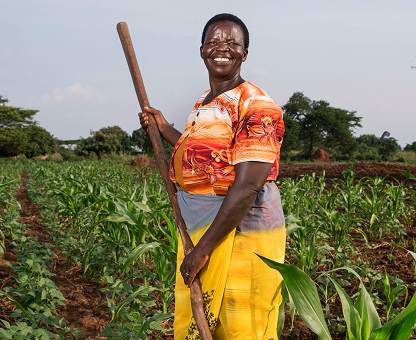
Where women thrive, democracy thrives.

It’s well documented that where women thrive, democracy thrives as well. A recent study of nearly 100 countries found that higher levels of women’s economic, financial, and political participation went hand in hand with stronger democracies—places with fairer elections, more active civil societies, and more accountable governments. Women’s reproductive health is a foundational driver of this relationship because it underpins two of democracy’s most powerful enablers: education and economic participation.
Education
Between half and three-quarters of youth pregnancies result in school dropouts, particularly among girls. When young women are pushed out of school, they lose the chance to build the knowledge, skills, and sense of agency that help them meaningfully participate in civic and political life. Research shows that countries with higher levels of women’s education see not only greater political interest and participation among women but also a higher share of women elected to office. They also see lower rates of corruption, political instability, and vulnerability to extremism.
Economic participation
Across countries, people with higher, more stable incomes are 20 to 30 percentage points more likely to vote than those with little or no income. This is because economic participation creates daily points of contact with institutions like banks, employers, and tax systems, which builds both the need and desire to participate in civic life. Countries where more women participate in the workforce consistently show higher rates of women’s civic and political participation, including voting, joining community organizations, and engaging in local governance.
Access to reproductive healthcare is the beginning of a virtuous cycle. Expanded access allows more women and girls to stay in school and enter the workforce. These women participate more fully in civic life and democratic institutions, which, in turn, reinforce equality through policies that protect and promote women’s well-being. This can include criminalizing gender-based violence, promoting comprehensive sexual education in schools, and increasing access to reproductive medical care such as prenatal doctor’s visits and reproductive cancer screenings.
Countries with high levels of women’s economic, financial, and political inclusion tend to be those with
fair elections, autonomous civil societies, and accountable governments.